


Shri Mohan Charan Majhi
Hon´ble Chief Minister,
Chilika Ecology and Biodiversity
Lagoon Ecology
As a background to defining current resource management problems within Chilika Lagoon, this section of the report describes the Lagoon ecosystem and the current status of the aquatic resources. Relevant features of the ecosystem directly supporting, or contributing to fisheries and aquaculture production, are highlighted.
High nutrient concentrations are often present in Lagoons as a result of both riverine nutrient inputs and effective nutrient recycling between the sediments and the water column. Lagoons are, therefore, often highly productive aquatic environments. A comparison of productivity land biomass estimates for lagoons around the world (Tables 4.1 and 4.2 in Barnes, 1980) clearly indicates that Lagoons are characterized by exceptionally high productivity and biomass, compared to other aquatic ecosystems. The following features provide lagoons with their distinctive characteristics.
- 1. The high degree of shelter from tidal and current action
- 2. The relatively stable salinity gradients
- 3. The soft mud and/or sand substrates
- 4. The well-mixed nature of the water column through wind action
- 5. Extreme shallowness
- 6. Organic richness in sediments
- 7. Rapidity with which they change (over geological time scales)
in climates with seasonal rainfall, and where major inputs of freshwater exist a pronounced seasonal variation in salinity and/or water level. In comparison with estuaries, contributions of phytoplankton and submerged macrophytes in lagoons are more important in production processes. Most of the production is consumed within the system, and there is less export of nutrients and organic material due to the closed nature of lagoons and of the unimportance of tidal fluxes. Carbon sources include phytoplankton, benthic and epiphytic algae and detritus derived from macrophytes. The latter detrital source is especially important as a source of carbon.
In summary, lagoons are extremely productive environments due largely to high nutrient inputs from surrounding land drainages, as well as efficient nutrient re-cycling. This high productivity supports lagoon fisheries for both fish and shell fish. Lagoons are ephemeral environments (on geological time scales) evolving rapidly into other types of semi-aquatic, habitats (marshes, swamps). Simultaneous with this succession is a gradual shift from high salinity conditions to freshwater. Human activities within lagoon watersheds often serve to increase the succession rate of lagoons towards their ultimate terrestrial end-state. Virtually all of these general processes appear to be currently operating within Chilika Lake.
- 1. The high degree of shelter from tidal and current action
- 2. The relatively stable salinity gradients
- 3. The soft mud and/or sand substrates
- 4. The well-mixed nature of the water column through wind action
- 5. Extreme shallowness
- 6. Organic richness
- 7. Rapidity with which they change (over geological time scales)
- 8. In climates with seasonal rainfall, and where major inputs of freshwater exist, a pronounced seasonal variation in salinity and/or water level
Floral Biodiversity
Chilika is a complex ecosystem with a spatiotemporal salinity gradient and complex hydrological regime due to simultaneous connectivity with rivers and sea. The lagoon is broadly divided into four ecological sectors based on the salinity regime, i.e. northern, southern, central, and outer channel. Salinity is found to conspicuously influence the composition and distribution of the macrophytic vegetation of the lagoon. The factors that affect growth and distribution of the macrophytes are sediment texture, nutrients, and other inputs from the drainage basin along with the salinity regime.
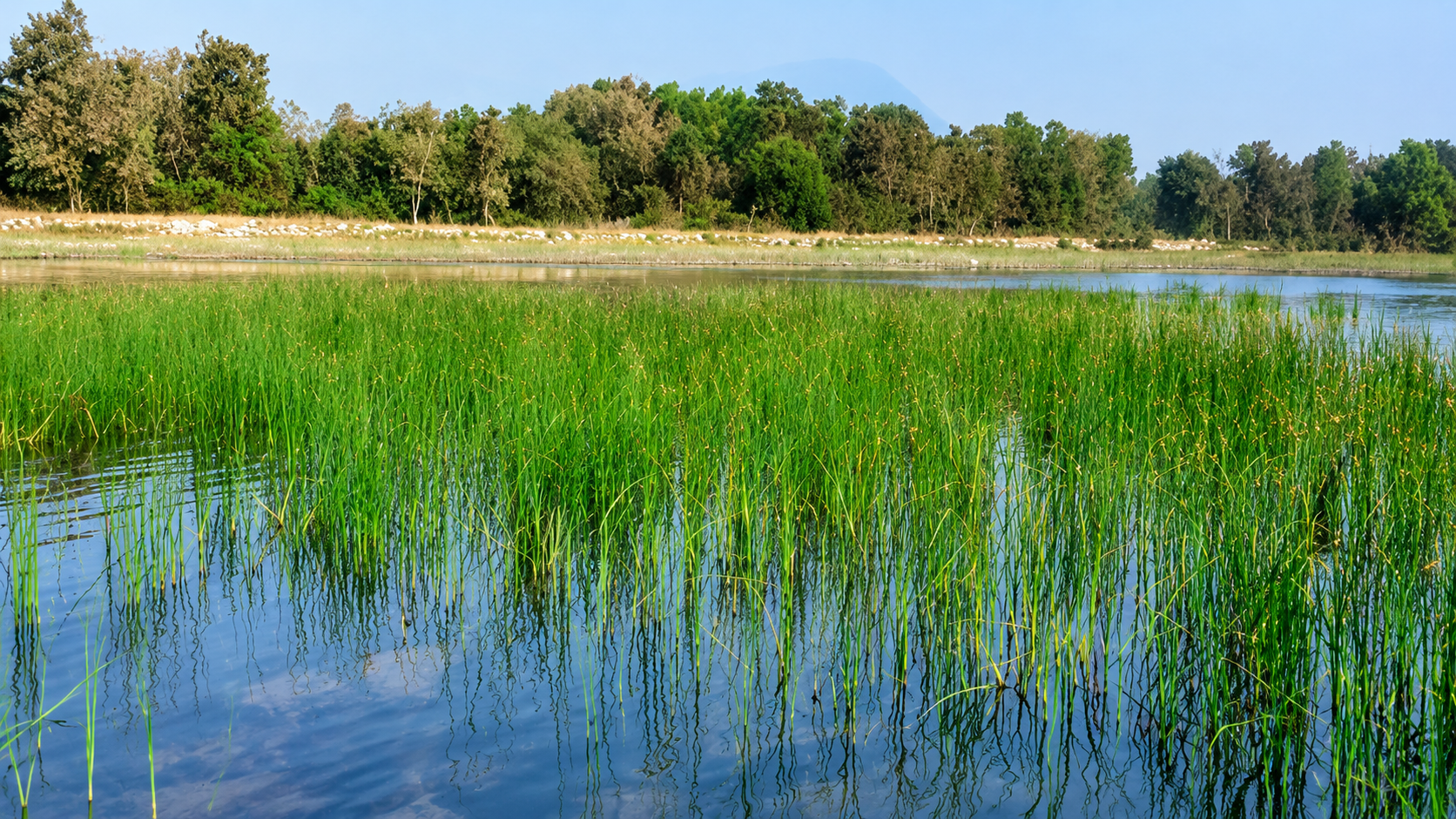
The flora of Chilika was quite rich in terms of species content and vegetational diversity. A critical analysis of the vegetation revealed the occurrence of species that were rare, threatened, wild relatives of crop plants, economic and medicinal plants and those that were endemic to Chilika. The macrophytes encountered were classified into four broad groups, i.e. emergent, rooted floating-leaved, submerged, and free-floating. Emergent macrophytes are mostly perennial higher plants growing on periodically inundated or submerged soils with their basal portions submerged in water and tops above the water level. The rhizomes and the roots spread laterally into the deeper water to adjust with the changing water levels of the lagoon. The emergent species like Phragmites karka, Schoenoplectus littoralis, Schoenoplectus articulatus, Typha angustata, Cyperus platystylis, and Cyperus compressus were common in the eulittoral zone of the northern sector from adjoining Kalupadaghat to Mangalajodi village, extending up to the river confluence point of Daya, Bhargavi, and Luna. The western river confluence points of Kansari and Salia also supported the luxuriant growth of many emergent macrophytes.
An occurrence of 748 species of angiosperm belonging to 486 genera under 127 families were recorded and identified by the Regional Plant Resource Centre, Bhubaneswar, Odisha, India. An updated checklist of the macrophytes of Chilika Lagoon, its
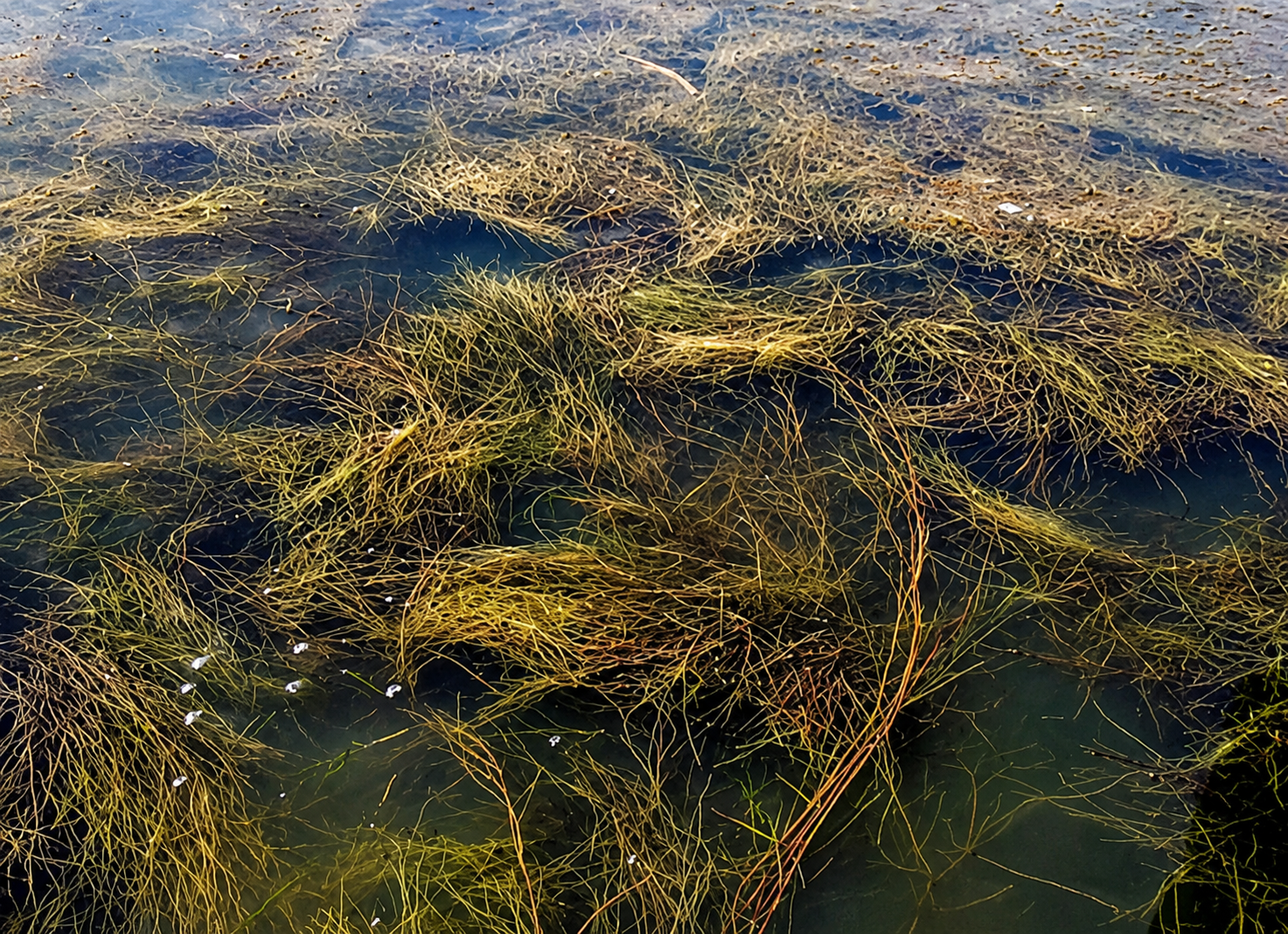
uninhabited islands and shoreline has been published by Tripathy et al., 2020. Based on exhaustive and multi-seasonal survey of the lagoon, its shoreline and uninhabited islands under the Integrated Coastal Zone Management Project from 2012-2020 and earlier studies by the present authors and others, an updated checklist of 884 species of flowering plants belonging to 537 genera and 130 families has been prepared and presented in this paper. Out of this, 80 species are reported by Tripathy et al., 2020 for the first time from Chilika lagoon and its adjoining regions. For each species, correct botanical name, family, local name (wherever available), flowering and fruiting time and locality of collection have been provided in the list.
Seagrasses
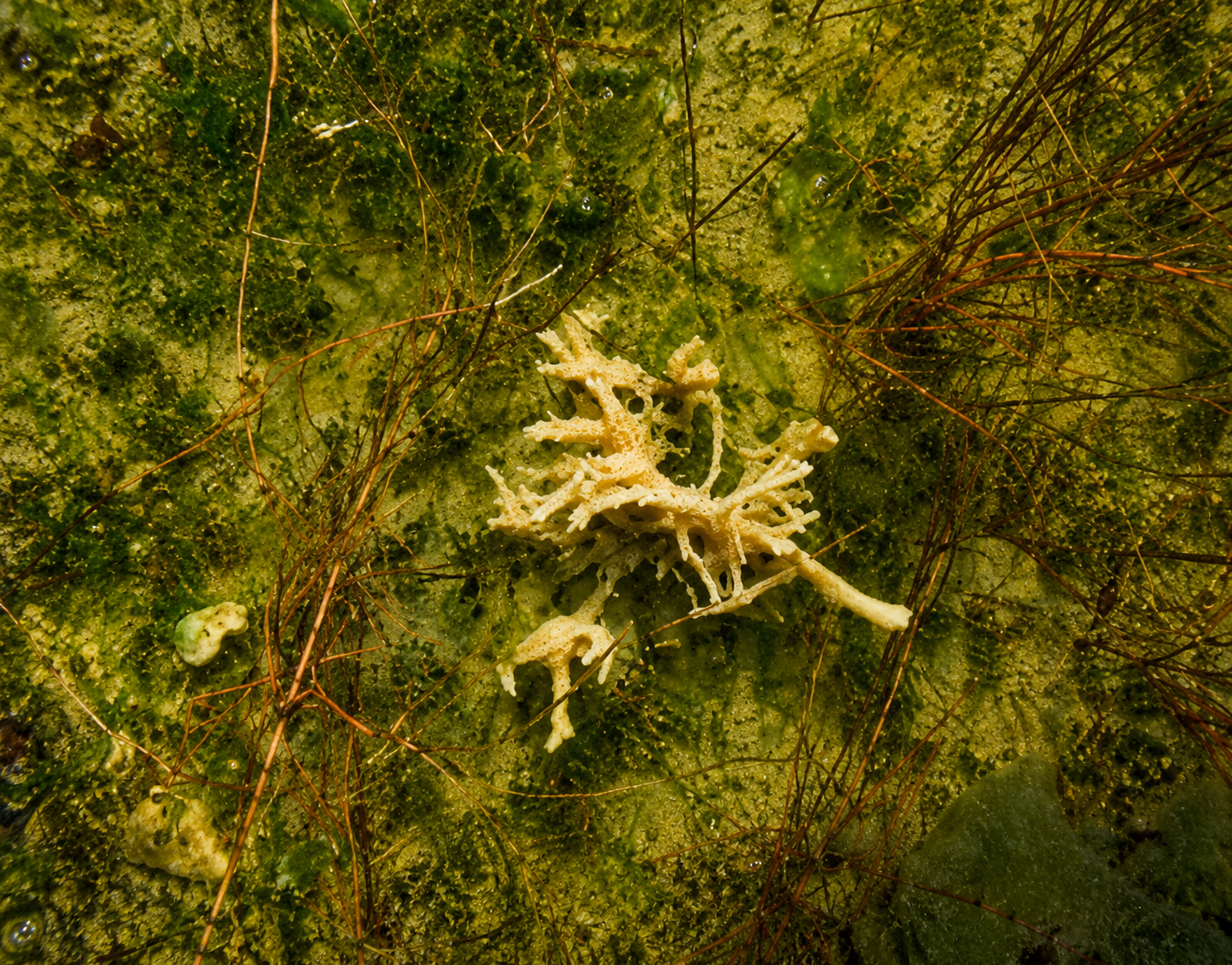
Seagrasses are benthic macrophytes that mitigate climate change by sequestering carbon in their biomass and underneath sediments. After the hydrological intervention, a proliferation of the seagrass meadows into the deep-water zone and appearance of
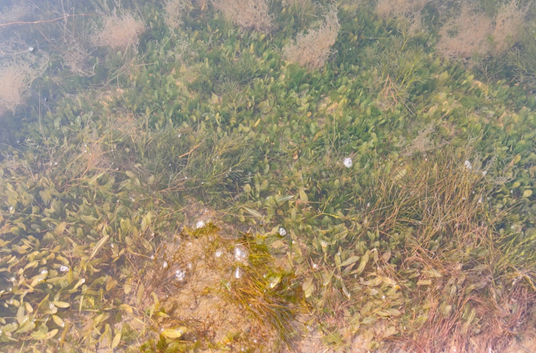
species like Halodule uninervis, Halodule pinifolia, and Halophila ovalis was recorded (Pattnaik et al., 2008). Well-established seagrass meadows were recorded from the central, southern and outer channel after the opening of the new mouth. The seagrass meadows were found at their best in calm sheltered areas with sandy substratum starting from the southeastern part of the southern sector extending through the creeks of the central sector up to the village Arakhakuda in the outer channel. A total of 6 species namely; Halophila ovalis, Halophila ovata, Halophila beccarii, Halodule pinifolia, Halodule uninervis, and Ruppia maritima were recorded from the lagoon. Among these species H. ovalis was most dominant species found all the sectors. Halodule pinifolia was dominant in some specific sites of southern and Rajhans site of outer channel area. Halophila beccarii was particularly dominant and abundant in Alupatna, Rambhartia of outer channel area and Dhobatutha of southern sector of Chilika lagoon. The shoreline of the southern sector from village Pathara up to Somolo Island supported excellent seagrass beds of Halodule uninervis and Halophila ovalis in association with the red algae Gracilaria verrucosa. Cymodocea serrulata was recorded from the shoreline of Odialpur from the southern sector. The sheltered bay behind the Ghantasila hill up to the point of origin of Palur canal also supported meadows of Halophila ovata associated with Ruppia maritima.
Saltmarshes
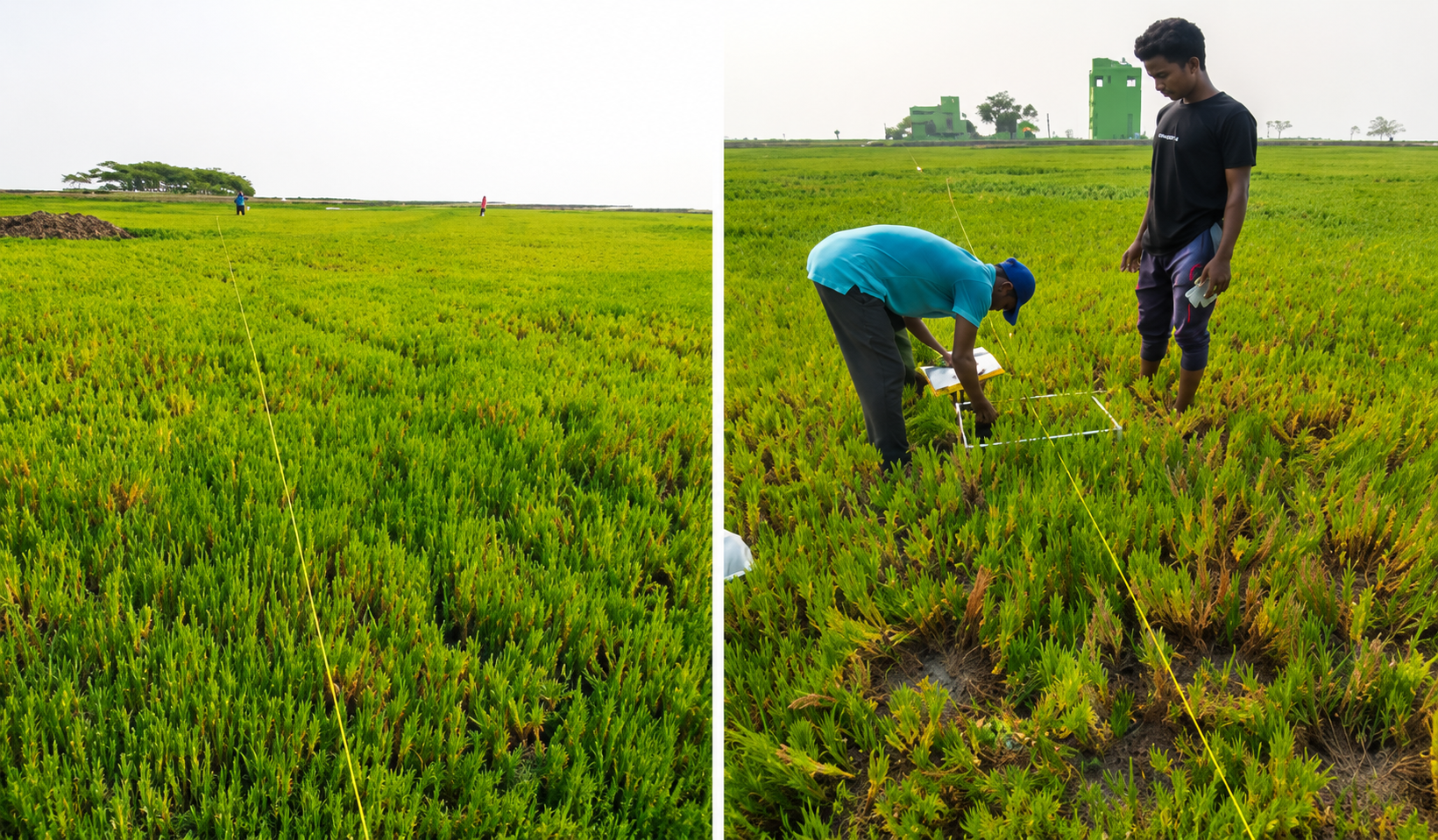
The Nalabana Island is a wintering ground for many migratory birds and gets completely submerged during monsoon. As the water recedes from the month of November, many species characteristic to salt marshes like Paspalum distichum, Cressa cretica, Salicornia brachiata, Croton bonplandianus, Sesuvium portulacastrum, and Heliotropium curassavium make their appearance. The grasses like Cynodon dactylon, Diplachne fusca, and Paspalum paspalodes started appearing as soon as the land surface became dry. From January onward, as the water level receded, the island becomes exposed and the grasses, sedges, and herbs characteristic of salt marshes colonised and spread to the entire island by the end of March. Paspalidium flavidum, Paspalum distichum, Cyperus rotundus, Panicum montanum, Sesuvium portulacastrum, and Salicornia brachiata were the dominant species in the Nalabana Island.
Nalabana got the status of a sanctuary in 1987. It is situated in the heart of Chilika. it is a prime refuge point for thousands of resident and migratory birds and specially acts as a treat for the bird-watchers during winter season. One can look out for birds like Spoon-billed Sandpiper, Black-tailed Godwit, White Bellied Sea Eagle and get delighted by watching them playing in the water. The ideal time to visit the sanctuary is during winter when the sanctuary mostly gets submerged under water and most of the birds are available during that period. The birds can be watched from the boundary pillars installed demarking the sanctuary area by Chilika wild life department, Govt. of Odisha. Scientists/researchers and government officers can venture in to the island for public service purpose with due permission from DFO, Wild life Chilika, Odisha.
Faunal biodiversity
Dolphins
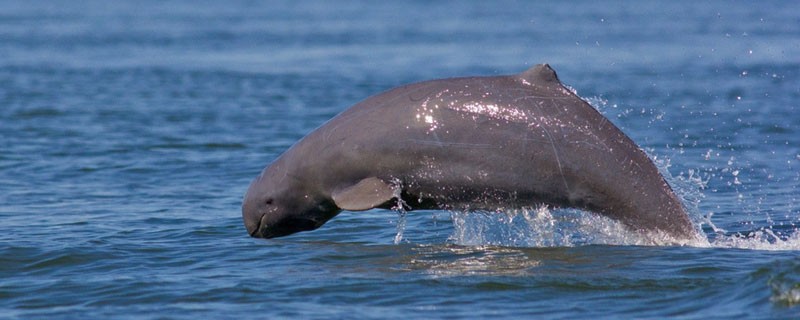
The Irrawaddy Dolphin (Orcaella brevirostris), is a somewhat elusive species, found in various large rivers, bays and estuaries in South and Southeast Asia. It’s IUCN Red Data Book status (Groombridge, 1993) is ‘undetermined’, but suspected to be Rare, Vulnerable or Endangered and it is listed in CITES Appendix II. Irrawaddy Dolophins are found in Chilika Lake, but it’s status is somewhat uncertain as reports are conflicting. Ram et al (1994) report that this species was once abundant in the Lagoon but today it is endangered, although it can occasionally be seen near the Lake mouth. Others, however, are more optimistic. Dean and Saaltink (1991), for instance, report that 60-70 dolphin can regularly be seen in the channel between Satapada and the Bay of Bengal.
CDA intiated research on Irrawaddy Dolphin of Chilika Lake since from 2000, regular survey is carried out to understand their behavior, distribution pattern in the lagoon. After the ecological restoration their habitat is observed to be expanding. In collaboration with the Tokyo university, CDA intiated accustic methods for survey of the Irrawaddy dolphin in the lagoon. As per the population estimation carried out in 2025 , there are 15 number of dolphins in the lagoon.
Birds
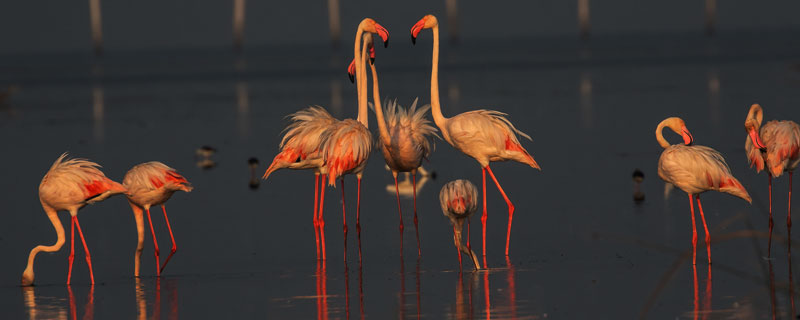
The global importance of Chilika for individual waterbird species was recognised through the waterbird population monitoring study carried at Chilika from 2002 to 2016 by the Bombay Natural History Society in collaboration with the Chilika Development Authority (Balachandran et al. 2006). The observed counts for 45 species recorded during the study exceeded their known 1% of the bio-geographical population (based on the datasets contained in Waterbird Population Estimate online database hosted by Wetlands International at wpe.wetlands.org). Being located on the Indian east coast, significant populations of several waterbird species migrating along the East-Asia Australasian Flyway also winter in Chilika. This was validated based on ringing recoveries (e.g., Northern Shoveler Spatula clypeata, Gadwall, Curlew Sandpiper (Hussain et al 1984), and satellite-tracking (e.g., Bar-headed Goose) studies (Balachandran and Sathiyaselvam (2010). Chilika also provides a stop-over site especially during the northward journey for the waders wintering further south of Chilika.
Nalabana Island, situated within the Central Sector and covering an area of 15.52 km2 , is a major congregation area for a number of waterbirds. Acharya and Kar (1996) suggest that the island hosts as much as 75% of the total population of birds wintering in Chilika. An Updated Checklist of Avifauna found in and around Chilika Lake, Odisha, India was published by Wildlife Institute of India, Dehradun and Bombay Natural History Society, Mumbai, (Indian Forester, 146 (10) : 955-968, 2020). A total of 222 species of avifauna of 62 orders and 20 families were recorded in and around study area. Nine (9) new bird species (River Lapwing Vanellus duvaucelli, Glossy Ibis Plegadis facinellus, Indian Thick-knee Burhinus indicus, Alexandrine Parakeet Pstittacula eupatria, Chestnut-headed Beeeater Merops leschenaultia, Wire-tailed Swallow Hirundo smithii, Whiterumped Munia Lonchura striata, Scaly-breasted Munia Lonchura punctulata and Black-hooded Oriole Oriolus xanthornus) were recorded first time in the study area.
Nalabana got the status of a sanctuary in 1987. It is situated in the heart of Chilika. it is a prime refuge point for thousands of resident and migratory birds and specially acts as a treat for the bird-watchers during winter season. One can look out for birds like Spoon-billed Sandpiper, Black-tailed Godwit, White Bellied Sea Eagle and get delighted by watching them playing in the water. The ideal time to visit the sanctuary is during winter when the sanctuary mostly gets submerged under water and most of the birds are available during that period. The birds can be watched from the boundary pillars installed demarking the sanctuary area by Chilika wild life department, Govt. of Odisha. Scientists/researchers and government officers can venture in to the island for public service purpose with due permission from DFO, Wild life Chilika, Odisha.
Out of total documented species, most of them were Least concern (201) followed by Near Threatened (17), Vulnerable (2) and Endangered (2) category of the International Union of Conservation of Endangered Fauna and Flora. Due in part to the importance of Chilika Lake for migratory species of Arctic and Central Asian waterfowl (e.g. flamingoes), the site is internationally important as one of two Indian wetland conservation sites designated under the Ramsar convention. Chilika is particularly important to migratory waterfowl as a wintering habitat, during which time both bird numbers, as well as a bird diversity, show seasonal peaks (Figure 2.9). Specific information concerning bird feeding requirements, habitat selection, protection and research requirements are summarized in. The 2026 bird estimation exercise has been completed for the Chilika lagoon and the total bird count recorded was 11,32,200.
Fisheries
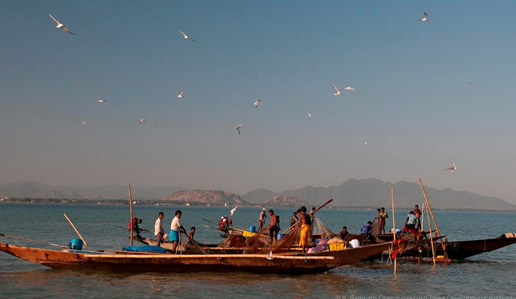
Chilika is one of the region’s finest repositories of aquatic biodiversity and a rich fishery resource supporting the livelihoods and nutritional security of more than 0.2 million local fishers (Mohanty et al. 2015). Mohapatra et al. (2015) published the updated list of fish and shellfish fauna of Chilika. he recent publication on the ichthyofauna of Chilika Lake (Mohanty et al., 2015) provided the updated comprehensive systematic checklist of 317 fish species (1916-2014), inventory, faunal characteristics and assessment of fish biodiversity status for the first time. A comprehensive systematic checklist of 317 finfish fauna with updates on the taxonomy of fishes of Chilika for the period 1916–2014 was published by Mohanty et al. (2015), thus providing a baseline of the ichthyofaunal diversity study of the Chilika. However, the recent checklist of species including finfishes and shellfishes enlists 383 species (Mohapatra et al. 2015). The ichthyofaunal of Chilika comprises 317 finfish species of 207 genera, in 88 families and 23 orders; 31 species of prawns and lobsters of 16 genera in 11 families and single order and 35 species of brachyuran crabs of 27 genera in 15 families and single order.